Sunday, June 2, 2013

To be or not to be...

To start off, I have to say that I had a lot of fun with blog posts this year. A lot of fun! Although they seemed like a burden in the beginning of the year (Every weekend?! 200+ words?! Blasphemy!), they helped me reflect on what I was reading and search for deeper connections to the text. I would anticipate the week's blog post, so that I could rant on, or hate on, a certain reading. The blog was my canvas and my brain would just explode onto it, sometimes in incoherent jumbles of words, but it was a therapy of sorts, allowing me to express my strong feelings about something that moved me entirely. In short, I think I should end my blog posts this year on a long note; I am a little reluctant to let it go after an amazing year, so I might as well delay this sad breakup in any way I can. 

To be or not to be -- that is the question. Hamlet is trapped in a well of internal turmoil, and his inability to carry out any action frustrates him to no ends. He plots his way to Claudius's murder, but hesitantly. This theme of frustration and inaction is carried throughout the play as he continues to torment Claudius and Gertrude as well as himself and Ophelia. He openly curses his mother, as noted when he says, "I will speak daggers to her, but use none" (3.3.429). Hamlet insults her in the famous bedroom scene and decides to leave Gertrude to her own torment, but he does not seem to openly denounce Claudius, instead choosing to plot slowly and make Claudius face his guilt. When Hamlet's wits escape him, he acts irrationally, but when his rational mind is in place, paradoxically when he is "mad", he holds back.

The question is, is Hamlet's inaction a virtue or vice? (This is going a little farther than where we got in class) Hamlet certainly did take long enough to kill Claudius, but even so, he killed Claudius in the heat of the moment, after his mother and Laertes lay dying, not in an epic showdown. In a way, it seems as if Hamlet never wanted to go that far, because his rational mind restrained him. His turmoil stems from his wish to kill Claudius and take the throne as well as his his to stay rational, an obvious fight between his id and superego (also referring to Freud). Hamlet's inaction not only prolonged everyone's death, but also caused him grief. However, revenge is best served cold, and Hamlet may have been waiting for the perfect moment to denounce Claudius and kill him in a manner worthy of dramatic hero movies; on the other hand, Hamlet's inaction allowed Demark to slip even further into ruin. It must also be remembered that Hamlet was scholarly and cautious. So, was his indecision good or bad?

Ending on a more random note, I find Hamlet adaptations everywhere. As a child, I watched Lion King. Innocently. My mind was completely blown when I found out that it's an adaptation of Hamlet. Suddenly I realize that it is everywhereHamlet has even crossed racial boundaries and the Chinese, Indian, European, etc. have all made some kind of reference to it. Just this weekend, on a lazy day, I decide to watch The Banquet, which is strongly based off of Hamlet, but I was completely shocked by the director's liberties, especially after reading the actual play. In this adaptation, the equivalent of Hamlet was infatuated with Gertrude, who is not his real "mother", but rather the Empress Mother after she betrays him and marries his father. There's no ghost and Hamlet is a complete pansy, even more delicate than the Hamlet in Shakespeare's play. Gertrude is actually the most crafty of them all, plotting to kill Claudius and take the throne as a female Emperor; Polonius and Laertes are equally cunning, planning to overthrow Claudius and  foiling Gertrude's plans. Laertes even ominously warns Hamlet to lay low, because his action will cause the death of everyone else. The lesson I gleaned from all of this is that Hamlet's plight is ubiquitous and felt by all.  Like "Shakespeare in the bush", we can all interpret Hamlet differently. We can all (as Ms. Valentino warned us) connect with him in some way, and his multifaceted character appeals to us because we are Hamlet. 

Well, blog, I think it's time to say goodbye. It's been a fun year with you and I'll miss my weekly posts, but I will continue to read on! 

Signing off for the last time,

Annie

Friday, March 22, 2013

Living Other People's Childhoods

David Sedaris is jealous that his partner, Hugh, is able to visit an Ethiopian slaughterhouse for a field trip. Which is ironic because in America, it would be highly inappropriate and it wouldn't be one of the first places to come to mind. The trip concludes with the short-lived introduction of a white little piglet with trotters clacking "delicately" on the floor. It is subsequently shot at point-blank range and although the children are traumatized, the teachers are hardly fazed. Hugh also recounts without much enthusiasm, the visits to actual fields, the room where a dictator was murdered, and watching hyenas being fed. For Hugh, his life is close to typical for him; for Sedaris, Hugh's life is unique and mindblowingly amazing. 

Of course, Sedaris imagines this from his point of view. His life in the slow, easy-going North Carolina does not even hit the radar of "astounding excitement!" To achieve this compare/contrast, Sedaris uses extensive parallelism, point-by-point, to highlight that his life is rather uneventful. While his pets are named normal names so normal that I can't even remember them, Hugh's pets are called Satan and Charlie Brown. Furthermore, Hugh has a monkey, the epitome of exoticism. (WHO DOESN'T WANT A PET MONKEY WHOSE ARMS YOU CAN RUN INTO?) Sedaris remarks that “the verbs are the same, but [Hugh] definitely wins the prize when it comes to nouns and objects” (8). He admits that he and Hugh shared similar landmarks in life; however, despite the difference in outward lifestyles, both shared almost the same level of contentment. Hugh saw nothing special about his daily life, and likewise, Sedaris saw nothing special about his daily life. It is all a matter of perspective.

Sedaris' entire passage is covered in irony. He knows that Hugh's life is not necessarily the best, yet he portrays it as so. Sedaris wants the glories and experiences from Hugh's life, without the danger. Like a "petty thief", he borrows Hugh's life and adapts it as his own with no reserve. This allows him to fill out the gaps in his childhood and to flair and smooth it out as well. He realizes that there are those who are worse off than him, and that he should remain content with what blessings he has.


Sunday, March 17, 2013

Advancing Backwards


http://www.public.asu.edu/~shaydel/images/personnelcartoon.jpg

Alice's Red Queen once said, "you see, it takes all the running you can do, to keep in the same place." We are constantly hungering for knowledge, to cure the diseases which may ironically, be caused by our own experimentation. We advance, only to fall backwards again, impeded by our blind search for the meaning of life. We find ourselves looking for antibiotics that cure what mankind as released onto itself. Like Victor Frankenstein who unleashed his monster into the world only to have his loved ones murdered, Marie Curie's radium not only killed herself, but was also used in nuclear weapons that killed others and currently leaves nations at the brink of disaster.

In Raymo's "Measure of Restraint", he relates the tale of the little girl who, unbeknownst to her, rubbed radioactive materials all over her body like "carnival glitter". The most dangerous part of knowledge and science is that it assumes the guise of innocence and harmlessness. Our GM (genetically modified) foods sit harmlessly on the supermarket shelves and eventually make their way into the body. What are the long-term effects? They are evident in other arenas of life. We eat antibiotics like we drink water, using them for any aliment. What are we seeing now, decades from the discovery of penicillin by Fleming? We are dumping millions of tons of bacteria into the environment, leading to the survival of drug-resistant strains that leave doctors to "keep running" and find new antibiotics that will, in time, be rendered useless again. Yet we have no other alternative. It's either keep ahead of the pack, or be eaten by the pack. A PBS special remarked that "time was running out" for certain individuals with multi-drug resistance, and that bacteria are gaining resistance too quickly for new cures to hit the markets. Should we let these people die? While Raymo's argument is understandable, it's absolutely irrational not to pursue science altogether. Man was bound to move forward, but he/she must do so with a level of caution.

You hear it on the news everywhere. Plasmids cut and glowing jellyfish genes inserted into bacteria or plants. Corn that is engineered corn, meat that is cloned. What are the consequences in the future. I think it was a bag of Sunchips that I ate once. It was the loudest, crunchiest bag ever, but had a stamp of approval "100% biodegradable" or some other greeny message on it. Although it sounded like an eco-friendly alternative to tossing it in the trash, the bag actually had a disclaimer: It would be reduced to plastic particles barely visible to the eye, yet "____ particles' effects on the environment are unknown at this time". In essence, we're trying to hide our own problems, the trash created from previous experiments, through new experiments. How much longer will it be before we realize that plastic or some unknown particle is killing us, just as the scientists realized that radium was deadly?

Much like how Eve ate the apple from the tree of knowledge and was banished from the Garden of Eden, we must approach science cautiously; it is a double-headed snake waiting to strike when we least expect it.

Sunday, March 10, 2013

To be Poor or to be Rich

Being poor is terrible. No one ever wants to be poor, and whenever politicians and activists speak out about it, they denounce it and address it as one would best address a deadly disease, delicately, but not so. If you really want to get into the economics of it, poverty-stricken people would always have to exist, because wealth is very subjective. Furthermore, if everyone were "rich" and had endless money at their disposal, there would be mass inflation--and we can't have that--or everyone would be "equal" in wealth, making us all socialists or communists. Either way, we find that we must deal with our situations and that money does not necessarily correlate with happiness. (A good example which I am lifting straight from my textbook is the economic boom in China after 1994. Although urban people are wealthier by many degrees and conditions are improving, they are no more happy than the rural farmer.)

In Hazlitt's "On the Want of Money", he outright states that "Literally and truly, one cannot get on well in the world without money." This is true; without two pennies to rub together, you find yourself wondering where to get your next meal from and where you can sleep safely from night to night. There is no security in abject poverty, but at the same time, too much security in wealth leads to dissatisfaction and boredom. Hazlitt goes on to detail all that affluent people can do, but also the misery and unhappiness that accompanies it. He makes us realize that material wealth is superficial, and that we'll be unhappy no matter how much, or how little, we have of it until we reach the self-actualizaion stage on Maslow's hierarchy of needs and pursue what makes us happy. Or as Alan Watts put it, "What if money were no object? How would you really live your life?" In a society that places so much emphasis on having money to be successful, a majority of us compromise our true happiness for it. In the end, Hazlitt illustrates, we all meet the same fate, rich or poor, and we all have just one life to live. We can live happy and die happy, or life unhappy and die unhappy. 

Sunday, March 3, 2013

How to Alter Public Space for Dummies

Brent Staples comes across as a menacing, towering, young black male to all of his "victims". He describes the pain of being labelled and ostracized upon entering the social stage, and calls his ability to alter public space an unfortunate "inheritance". He is mistaken as a mugger, a potential attacker, and a thief time and time again. The black men are all connected in this way; they have experienced it and can only cope by sharing their stories. Staples understands that this idea has been deeply planted in society, and he does not expect it to change because despite the unfairness, there is a seed of truth. After all, how are you supposed to decide whether someone is a mugger or not when it is dark outside in a secluded place? (And if the news about last night's mugging is still fresh in your mind, it's bound to have a negative effect.)

This piece reminded me of the Trayvon Martin shooting incident that actually occurred just last year. Martin was an unarmed 17-year-old African American male who was suspected because he was in a guarded neighborhood, "cutting in-between houses...walking very leisurely for the [rainy] weather", and "looking at all the houses" as well as wearing a shifty-looking hoodie. Although there was a violent confrontation between Zimmerman and Martin, it's unclear who began it. The sad part is that black males take to violence more often and are more prominently featured in news stories than anyone else. This leads to the mentality that all black males are the same...which can be understandable to a certain extent. I've read Duke "alert emails" to all students, where the perpetrator of the muggings is described as a "tall, young, black male, wearing a grey shirt and blue jeans". The only difference is that some wear masks while others don't, so it's almost questionable as to who actually did it. So should we continue to allow black males to alter public space or should we stay cool and change this mentality? It's hard to say.

Well folks, I suppose the lesson is: When you're in doubt, always whistle Vivaldi Four Seasons.

Saturday, February 23, 2013

Aerosmith and Gunsmith

NRA: Is rather fond of guns.
Perhaps opposites attract. Sarah Vowell and her Dad, in her "Shooting Dad", are as different as chalk and cheese and two peas in a pod. It all begins and ends with a bang!, with a gun/cannon shot. She loses interest in guns when she has her first interaction with one at the age of six, and subsequently, interest in her father and his hobbies. While her father loves working with guns and most weapons of destruction, she turns to music and the arts. Furthermore, their house is likened to a war zone, with only a few areas in the house that are not dominated, and her twin glumly says that she is the "loneliest twin in history". The differences are endless and almost insuperable. 

Vowell has a sudden revelation (as her father is lobbing cannonballs in a public mountain and she is madly waving around a microphone) where she realizes that she is just as quirky as her father is; the two have messy work-spaces and enjoy fiddling with various gadgets. Although Vowell still does not like guns, she concedes by admiring the awesome power of the cannon, and the effect it had on her. Both are artists of different kinds, aerosmith and gunsmith, and her father's gesamtkunstwerk is a symphony in which her whole family will eventually play a part in.
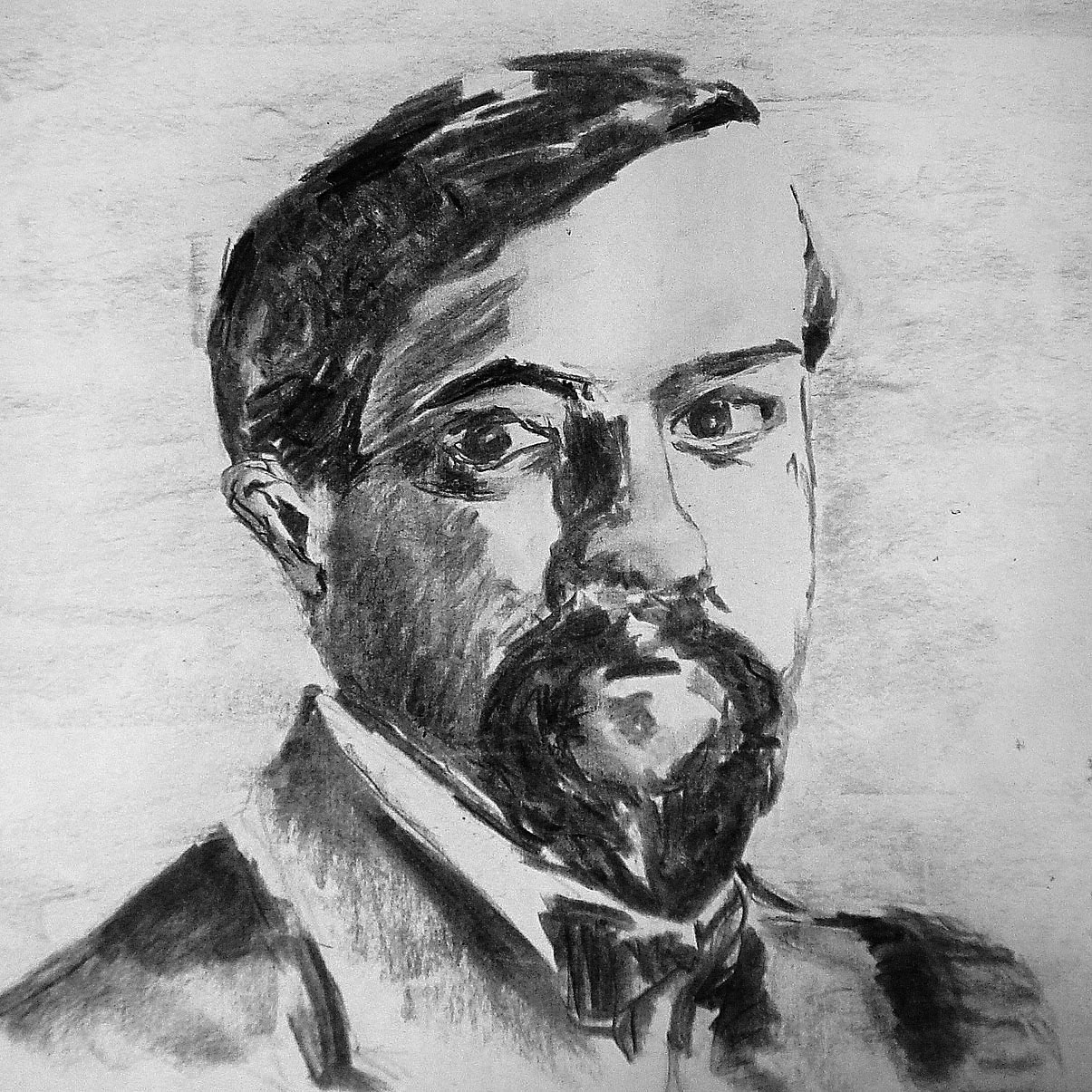
Debussy: Writes Clair de Lune.

Although the two have their differences, their relationship is not strained. She may not be as close as her twin is to her father, Vowell and her father have light, playful exchanges as they banter and joke around with each other, which is their manner of expressing love.  (Just as some married couples will argue and tease each other but not  really mean it seriously.) Ultimately, she sees past her differences and decides that she has much more in common with her father than she had thought. 

Tuesday, February 19, 2013

Cookin' with My Momma, Maybe?

"Bro, Dad, you can lean on me."
"That's my son."
In "Arm Wrestling with My Father", Manning conveys that there is more than one way to communicate with your parents. His father doesn't go to his orchestra concerts, but is more than willing to go to his lacrosse games and help him; arm wrestling becomes a favorite pastime, a symbol of their unspoken love. Their confrontation and role reversal occurs when Manning defeats his father in an arm wrestling match, but Manning doesn't want to overturn his father's strength and carry his father, who has gotten weaker and older. Manning's relationship with his father is very physical, and his father only softens at the very end when he realizes that his son has grown up and that he must lean on him. He understands that his father didn't need to tell him that he loves him. It is implied and strengthened through years of physical contact. 

Some parents are very expressive, while other parents are not so much. My parents, especially my Mom, fall in with the latter. [Now to pick on my Mom, who I like to pick on a lot just for fun, hehe.] While we like to chat with each other over funny news or bad gossip about celebrities' surgery gone wrong, I don't really recall her ever expressing her love for me verbally. She also never comes to my concerts or events in general (okay, I admit that maybe she comes during the last few minutes to wait for me to finish, but she also forgot to pick me up once and left me in the freezing cold), and takes a more passive stance in my life. But I can tell she loves me because she reads me news articles on how to improve my life, she comforts me in my perpetual failure, and she is confident that I will do well. I've realized now that a person can throw 'I love you' around and not really mean it, so maybe my Mom was wise to show it in other ways; I've also taken a long time to realize that the only reason why my Mom tolerates house chores is so that I have more time to study and become greater than her (maybe). Like Manning, I still want my Mom to take care of me and tell me that everything will be fine, and maybe I'm not ready to grow up yet. I haven't had the role reversal that Manning has, and probably will in some far-off-day-that-I'm-not-looking-forward-to, but I admire my Mom's steely strength and I've been able to understand and appreciate her a lot better. :)

Sunday, February 10, 2013

The Active Chase to Fish Cheeks Reading

In "The Chase", Annie Dillard shows us the importance of putting everything you've got into anything you try to accomplish. Through her elaborate chase, she reveals that she, Mikey, and even the adult enjoy the run. At the very end, the adult has an almost pleased, elated aura about him, and commences with his "You stupid kids..." speech as a formality. She compares this chase to the race of life, and how we must put conviction and true heart into it. Her ultimate purpose is to show that although the ending is enjoyable, the true adventure lies in the chase, in the run, in the fact that you put in 100%. At the end of every track meet, we may or may not win trophies, but the journey to that point in itself is incredible, with the friendships made and  life lessons learned.

On another hand, we read about Amy Tan, an American-Chinese, and her experiences during Christmas in "Fish Cheeks". As an angst-y teenage girl set on pleasing her American crush, Robert, the whole of the narrative is written from the American perspective. She describes her favorite foods as being disgusting and unappealing because she doesn't think that Robert would enjoy them. This is understandable (though not in that way); I would feel a little sick if I were to bring "Red cooked pigs-feet" to school and eat them with relish in front of my horrified table-mates. She all but faints when her father burps and encourages the minister to do so too. In the end, Amy's mother comforts her with a miniskirt, and after Amy has grown up and become wiser in the ways of the world, she understands her mother's true intent. I think that as an Asian-American girl, these cultural differences become more defined in the teens. You want to please others and identify with the "group", so when your parents do Asian things, you feel embarrassed and lash out at your parents and blame everything: your culture and the fact that your parents don't have perfect English. As you age, you begin to realize that it doesn't matter what others think, it's what makes you happy. {I feel ashamed for being so mean to my parents now and I have apologized to them numerous times for being such a dishonorable daughter.} You mellow out, become less self-conscious, and identify with both the American and Chinese aspects of yourself with no bad feelings, and in fact, it's even exciting to learn a little more about both sides. {It was only last year that I finally mustered up the courage to ask an Anglo-Saxon American what they really eat everyday, other than the hamburgers, pizza, pasta, and steak I think they eat.} You think "I do what I want. They can take me or they can leave me, but I won't change or feel bad for who I am." 

--Maybe one of these days I will bring pigs-feet to school and stand in the middle of the cafeteria screaming into the microphone, "I like eating pigs-feet Chinese style and there is nothing you can do about it! Call me strange, call it disgusting, but I will still eat pigs-feet!"--

I would end on a short anecdote regarding the Chinese experience, especially on Chinese New Year's Day (Happy Year of the Snake, by the way! And the picture to the left is actually two people in a lion costume.) Maybe I could recount a tale of sitting down to a table laden with noodles, dumplings, rice cakes, oranges, squirrel fishes and more. But, I ate American last night because my parents didn't feel like cooking, so unfortunately, nothing here.

I can only hope that my Mom and Dad make up for this by making some serious eats tonight. 

Sunday, February 3, 2013

...And we're back!


It took me about two hours just to wait for the internet to post this and it is driving me nuts and I've been clicking the publish button at least 9000 times and that is why I am writing in run-ons and if this does finally publish I will be so glad...
We start off Semester Two through critical reading, and contrary to what I thought, the close readings really do take about 1-2 hours.


“Champion of the World” by Maya Angelou revolves around Joe Louis, the Black Bomber, and his faraway fight. She relives the tension and the agony revolving around that single radio, so in a sense, the story was not so much focused on the fight itself, but rather the emotion that it evoked. As African Americans, it is difficult for them to reach a position of power; because they are constantly reminded of their history, they cannot move past and start anew. When Joe Louis emerges on the international scene, an immense feeling of pride overtakes them as they realize that against all odds, an African American man, son of an African American woman, has emerged the victor. It’s as if he represents their whole race and his movements in the arena dictate their rises and falls. Some people in our class discussion wondered if these people were placing too much importance on Joe’s actions, and I’m inclined to say that perhaps these people in Angelou’s story didn’t have much to place hope upon. The whole event seemed like one of the biggest events in their lives, with overindulgence and splurging, so this suggests that Joe is who they look up to, and who they see to hold the power in a white man’s society. When you’re a member of a minority, there’s a feeling of overwhelming pride when one of your kind stands up to fight for the rest. At those moments, you act as support and encouragement, much like these African Americans in the Store, and you can hope that his actions make a difference.

Maya Angelou’s recollection of Joe Louis’ fight draws striking parallels to another true story I watched. Fearless was about a man, Huo Yuan Jia, who fought his way up to fame through his amazing martial arts skills. I’m not quite sure how much of it was real, but his story went like this: After attempting to drown himself—his only child and mother are killed by a vengeful man—he is saved by a group of farmers. At the same time, China grows weak from attempts by Western countries to colonize it, and Chinese people are relegated to a minority status. Yuan Jia returns to make a statement for the Chinese people, and to demonstrate that China is not “the weak man of Asia”; he defeats numerous opponents and draws attention from both sides to his victories. The Chinese people rise up to support this single man and cheer him on from the stands. Tragically, during his last battle, he falls ill after he is poisoned by the westernized Japanese, yet he is declared the victor nonetheless. As he lies dying, his disciples ask if they should seek revenge, he answers that revenge is not the answer and that they should all try to make a difference in life. ~Fin.~ This movie proved that someone can stand up and make an indelible impact upon those they touch.

And yet, winning the battle does not necessarily mean winning the war. Although Yuan Jia’s victory and death made him a martyr and instilled a sense of national pride, it was much later that China was able to muster up force to drive out foreign influences. Similarly, the African Americans in Angelou’s story can’t even walk home without fear of being lynched.

Sunday, December 16, 2012

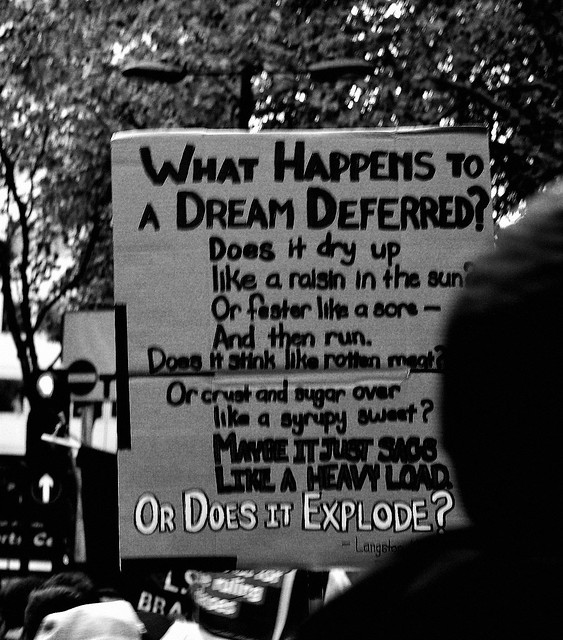
A Dream Deferred

What happens to a dream deferred? In A Raisin in the Sun, each character holds onto their dreams of transcending their problems and improving their situation. Mama reluctantly gives in at the end, wondering if dreams perhaps were never meant for people of her status. However, Walter becomes a man at last, realizing that money is not worth losing pride and dignity, all associated with his manhood and dream of being the man of the house.

Walter Younger fantasizes day in and day out about his glorious future and acts recklessly, innocently handing over the insurance money to fulfill these hidden dreams. Mama chides Beneatha for being too hard on her brother, and not understanding how many times he has been denied those dreams. Walter's desperation stems from the fact that he does not hold the position as the man of the house, and cannot provide the bacon for his family. This is seen in Act One where Walter gives his son a dollar easily, angered by his wife's blunt remark that the do not have the money. Walter hands the money without question to Willy (who we never see), because he wants to display his ability and manliness to his whole family. Ultimately, Walter's manhood is linked to his hopes, and by not being able to come to terms with them, he remains subservient to the women in the household. At the end, he breaks free of this and becomes the man his father was, realizing that there are other forms of happiness in the world.

Sunday, December 9, 2012

Those Weary, Lonely Blues

Minorities have always had a long history of being ostracized for their differences, and it's not just African-Americans that I'm talking about. Jewish people have been shunned from almost the beginning of time, women only received voting rights in 1919, and there have been numerous "anti-" laws against immigrants from Europe, Asia, etc. How do the ones without a voice speak up? Through jazz, poems, and other forms of media, they prime the audience to slowly begin accepting them as equal individuals.

Women began to express their discontent quietly through poetry, like the poem from Le Beau Monde about a woman's repulsive husband; this was not unusual, and African slaves had long expressed their sorrow in gospels. This led the way towards The Harlem Renaissance, which was a complete explosion of jazz, literary works, and art, covered with and representative of their rejection, loneliness, and a desire to be seen as equals. While jazz entertained the upper crust of white society, it also brought them closer to each other, allowing whites to realize that African Americans as a whole were a force to be reckoned with, and not as ignorant as first believed. It is at this time that Hughes and others became a prominent figures in literature, expressing the suffering of their people and the hopes that someone can rise and change the tides.

This idea runs deep through the veins and rivers of America. Thoreau's Civil Disobedience stressed the need of a single individual to work against the machinery of society and to stand up for his/her beliefs; his work inspired many civil rights activists to do what was right. I feel like Hughes' and other African-American poets' works appeal not only to the whites who deny equality, but also to their own people. His poems appear innocent to the untrained eye, but reveal themselves to be calls to action, imploring everyone to make a difference. Martin Luther King Jr. was successful in that he "stood on the shoulders of giants" such as Langston Hughes and other African American revolutionaries.

Sunday, December 2, 2012

American Dream

Where do I begin? The Great Gatsby has been a jumble of events that ultimately shook me forever; you can always tell that you've enjoyed a book when you're left thinking about it on sleepless nights. What I realized in the very end was that "a dream is a wish your heart makes", and the material gains are simply ways of keeping score. The American Dream is abstract. While we can get close to it, it is impossible to attain our desires without wanting more. Likewise, it is simply impossible to turn back time and rewrite history (unless, of course, you're Stalin). 

Gatsby, a poor Westerner, moved to the East years ago in order to make his fortune in New York City, a name which has become synonymous with the American Dream. He comes into the acquaintance of a "nice girl", and obsessively makes her his goal to attain. Because Daisy is so glamourous and the "it girl", she in effect becomes linked to Gatsby's dream. In some corner of his heart, Gatsby understands that he can never get Daisy, yet he uses her as his raison d'être and begins to rise up, trying to achieve everything that he never had before. He creates a new persona for himself in all of the colors he wants to use, presenting himself as an ideal character who has it all.

However, Gatsby has been living in the past for so many years that when he finally gets his golden girl, he realizes that it's not the same as five years ago; Daisy has moved on and the situation is different. There is nothing left for Gatsby because his idealistic past has gone by, and he can't prepare himself for the future. Unlike the classic Humbert who has destroyed his dream, Gatsby has been destroyed by his. Overall, The Great Gatsby has been a novel of lost dreams and hopes, with romance and partying tossed in for seasoning; it is a representation of our society and our American Dream. Gatsby becomes the romantic hero because he has grown so attached to his innocent wishes that he can't expose them to the hard, cruel reality, resulting in his ultimate downfall. 

Like Zarrin states, "Anyway, I enjoyed reading it, and that counts too, can't you see?" 


Sunday, November 25, 2012

The Glitz and Glamour of the Ritz

We begin with the mysterious Mr. Gatsby, who everyone seems to know and not know at the same time. Gatsby is almost an enigma; Nick Carraway observes the coming and going of visitors on party nights, yet sees Gatsby stretch his arms lovingly towards the bay. There are several points in the conversations that Nick hears rumors that Gatsby was a German spy or murderer, and Owl Eyes is thoroughly surprised that the books are real, even though the parties seem like stage tricks. Although Nick finds his company pleasant, he questions whether or not Gatsby is "real", because of his refined manners and almost "searching" glance during parties. Despite the glamorous people who pass in and out of Gatsby's parties, Gatsby seems not to know anyone personally, a mere spectator and mastermind in his elaborate performances.   

I visited New York City, the backdrop to the novel, for Thanksgiving. I wanted to see this "West Egg" and "East Egg", to better understand the novel. Unfortunately, I didn't really know where it was (though I suspect it was at the tip of Long Island), but I could understand Nick Carraway's reaction to the city. It was fast paced and flashy, crowded with people waiting for the parade; however, there was an empty feeling to all this material wealth, as if the people were pining for something else. I pictured Gatsby's mansion as sprawling, much like Breakers in Newport, and a hollow shell. I envisioned Gatsby as a clean cut, lonely man broken and sorrowful inside--despite his charisma and self-confidence--with a wistful look directed across the bay. Perhaps material wealth can't buy everything, and we will never be satisfied; at the same time, we are always waiting for something to happen, pawns in the grand scheme of life. 

Sunday, November 18, 2012

Sanctum

We are the result of our heritage and culture. Despite what we act like on the outside, we will always turn towards our native roots and cherish the past, however painful. What's more, we are all related to each other (which reminds me of the Six Degrees of Kevin Bacon I learned in math the other day). 

In Nikki Giovanni's Sanctuary: For Harry Potter the Movie, she shows us that we are are connected in some way. Even though Harry Potter lives in a magical world, and whose parents died saving him, we are no different. In the poem/allegory, Giovanni links Harry to the baby elephant from the beginning, showing the instinctive efforts of the parents and herd to protect the child. The herd wants the baby to remember and pass on their history, much like how African slaves sang gospels of their native lands, and how Native Americans expressed their culture through folktales. It's the reason why Harry Potter refused to call Voldemort "He-who-must-not-be-named"; he understood the power of letting go. How simple would it be to conceal the past and go alone with everyone else? While we may be connected to each other, we are made unique through our heritage.

This reminds me of the Holocaust Museum in Washington DC. The key theme was remembrance, even though the Holocaust was a tragedy. Survivors were urged never to forget, and to teach their children and others about the Holocaust. At first I felt it was slightly sadistic to irritate old wounds and to expose these traumatic events to the next generation, but I quickly realized that trying to bury the past only made pain and anger fester deeper. Through becoming educated and coming to terms with what happened in the past as well as our inborn nature, can we prevent things from happening in the future. We must embrace our cultures and pass down what has been bequeathed to us so that we may live on in memory. 

Saturday, November 10, 2012

Road to Perdition

Sin and wrongdoing follow us forever, but we can choose to defy social expectations and set standards. Regardless of how we deal with the guilt or suffering, it remains a part of us, and can define our characters or break them down. This is best exemplified in Hester Prynne and the continuous return to her crime.

Hester Prynne is at first defiant and proud of her sins, yet later carries an air of quiet dignity about her as she retreats from society's hypocrisy. Her fall from grace is similar to that of Eve's banishment from the Garden of Eden for attempting to gain knowledge. Immoral and unacceptable in the eyes of her fellow townspeople, she is cast out. Although she is initially lonely, she has Pearl as a companion, the embodiment of her scarlet letter and sin; Hester begins to "speculate" about her society and realize that there are flaws while beginning a self-course of repentance. Hester is able to soften the townspeople over a span of seven years, and the stigma attached to the 'A' fades away. Hester is able to escape the Puritans in part because she refuses to conform to their beliefs, and in part because she feels stifled after the death of Dimmesdale.  

The Scarlet Letter was an amazing book. Somehow, everything was symbolic in its own way, and the descriptions of the dark, severe Puritan town casts a shadow over the novel. Hester was able to defy the Puritans and their misguided belief system--she ends up punishing them by forming her own thoughts about the 'A', and remains as dignified as the day she stepped off of the scaffold. Even after she migrates to the birthplace of her sin to die, Hester's grave remains separate from that of her cowardly lover, Dimmesdale, who buckled to pressure and guilt. While Hester changed society and maintained her pride, Dimmesdale was tortured to death by it.  

Sunday, November 4, 2012

To sin or not to sin

How should sinning be punished? Even though the individual must face up to personal guilt, is it acceptable for society to castigate them for a single slip? When people's conscience shines through, they can choose to amend their wrongdoing and follow a different path, or self-destruct. This choice between evil and good is seen even today, where people are thrown into jail and hardened, regardless of whether their crime was severe or not. 

The Scarlet Letter is one of those books that tears me between sympathy and anger. Hester Prynne is ostracized for adultery, banished from the society and forced to wear a scarlet 'A' on her clothing at all times. At first, I feel no sympathy for Hester. Adultery is unacceptable and immoral, and should be punished. However, I relent once I find out that Hester must care for a child by herself, and that her paramour takes none of the responsibility. (This is also why I cheer on Chillingworth every time he tortures the cowardly Dimmesdale, who I despise.) Should Hester take on the burden of that by herself, just for a single sin? She changes over the seven years time span, growing grimmer yet more caring. Her "correction" is evident when the council people wonder whether or not her scarlet 'A' should be removed or not. 

Moreover, the society is incredibly hypocritical. It consistently makes use of her service as a needle-worker, yet never thanks her. The destitute accept clothing fit for kings and food, and sneer at her for thanks. Honestly, I don't understand why Hester doesn't just curse them, but in the end, she is reformed and slowly assimilated back into the society that cast her out. It still leaves me feeling unsatisfied though; did the society do good for her by being hypocritical and making her see her errors, or were they the ones acting unreasonably? I have yet to find out.

Sunday, October 28, 2012

Civil Disobedience or Obedience?

We always have to ask ourselves whether government is effective or not, and what we can do to change it. Even though a basic government upholds the law, establishes safety, and creates educational opportunities, we should still be well-informed citizens and actively participate in the decision making processes, seeking change as opposed to mindlessly following unreasonable rules. Yet, while a destructive government ought to be reformed, it is still better than no government and absolute anarchy. 

Henry David Thoreau, out of a fit of anger, tells us all that we should have no government at all, that the current government is corrupt and we are all mindless powder-monkeys. Is his statement valid just because he was jailed on the grounds of not paying poll taxes for six years? As a transcendentalist, he states in Civil Disobedience that he would like everyone to stand up against government. I have no problem with that part; as long as the reason for civil disobedience is well grounded and peaceful, it is excellent to participate in policy-making. However, his statement that the whole government ought to be done away with is going a little too far. Man has not advanced to the point where he can live in peace with his fellow citizens, so sooner or later, someone will undermine the whole utopia and take over control. Instead of waiting for that moment, it is better to maintain a government system that serves its people.    

The political treatise written by Niccolò Machiavelli questions Thoreau's statement that we should not have government at all, and that we ought to govern ourselves. According to The Prince, there must be an effective leader at the head of his peoples in order to rule fairly. Although politics are amoral, it is up to the prince to make good decisions and do whatever is necessary to maintain power, even if it means being a feared leader than a beloved one. How does this connect to Thoreau though? After all, Machiavelli did come several centuries before Thoreau did. In essence, it is crucial to have a government of some sort. If there is no effectively ruling government (or there is and it is floundering) a dictator or higher power will rise up to the helm. It would be in the best interests of America to keep a Democracy instead of turning to Anarchy or Communism (which is still not necessarily equal). 

Sunday, October 21, 2012

You can run, but you can't escape from Appeals.

Appeals are incredibly persuasive, and almost no one can resist it's allure. Whether it's to make you buy merchandise, choose a side, or change your mind, appeals work without fail in tugging at your heartstrings. While some people shun it as being deceiving, I disagree because it essentially adds flavor to any argument and is not so much deceiving as incredibly exaggerated. All in all, it's a very effective mode of persuasion.

The Crisis by Thomas Paine is an excellent example of writing loaded with various logical, emotional and ethical appeals. Every time I read "These are the times that try men's souls" I can almost envision freezing, hungry men that are huddled around a campfire reading this pamphlet. With the continued praise of their hardiness in such poor times, I picture them as glowing with pride, and then rage at the "summer soldier and the sunshine patriot" who are too scared. Paine uses logic to tell the soldiers that while the battles may be lost, they will certainly win the war. He goes on to appeal to ethics and emotions by picturing the British as a cruel, heartless people, and the patriots as courageous and bringers of liberty. By the end, I should think that the soldiers are screaming and cheering, ready to take on the British. While The Crisis was effective propaganda, I'm sure that some of the facts were twisted around, and that the British had a similar pamphlet with completely different arguments.

I think all of us are incredibly impulsive creatures. Almost every week my family goes through the dilemma of impulse shopping; my dad has a predilection for sweets, my sister likes accessories, and my brother is obsessed with technology. I too am a hypocrite, for while I preach against the evils of impulsive buying and excessive spending, I still succumb and end up buying things that are too cute not to be bought. On another note, we as humans do lots of television watching; sometimes, the media can be a little biased, and the commercials and news segments might try and influence us by bringing out starving children, skewed statistics, or other heartbreaking news. Earlier, while I was on the edge of considering whether or not to donate to the Kony 2012 rage, I did a little research past the sob story and realized that a small percent actually went to the children, so I opted for UNICEF instead. Even thought some of the ads and appeals we see may be trying to get at a real point, I think it is best if we all try and take on a more critical mindset and weed out fact from flowery language. It doesn't hurt to have an appeal control us once in a while, but we shouldn't completely rely on these appeals and advertisements for a straightforward truth.


Sunday, October 14, 2012

Just Say No!

Saying no to social norms is extraordinarily difficult, especially if people expect a certain behavior from you. In hindsight, we may look upon a situation as incredibly silly and obvious, perhaps even getting overconfident as to declare that you would never be a passive player. “If I were in that situation, I would…” we may say, but in reality it is a lot easier said than done. What does it take for us to step out of our bounds and actually go against something?


In the case of Kitty Genovese, over 38 people witnessed her slaying, yet no one bothered to offer deliverance by reporting the crime or getting involved. These people were not bad; they were decent citizens much like you and me. Later, they felt overwhelmed with guilt, much like Reverend Hale from The Crucible, for not helping out or even reporting the situation. To an extent, even Judge Hathorne and Danforth realized that their proceedings were ignoble, yet they went on with the show. From all of the good people in Salem, only a few decided to call out the Church and denounce the “witchcraft”. It must be understood that the mob mentality controls the lives of these people, and once caught in the tide, shifting to the other side is difficult. 

I witnessed a case of bad fellowship myself, and unfortunately, was one of the passive spectators. During summer, I visited the Upper Peninsula. I was walking up a hot hilly dune that led down a bluff to the water. As I took pictures, I noticed a boy next to me lying in the sand, unresponsive and breathing shallowly. At first, I wanted to bend over and shake him to check if he was okay, but I thought that with the over fifty people present, it would be best not to interfere. No one else really cared, so maybe he was just resting. So, instead of doing what I thought was right, I walked on. Later, when I walked back, there was a large group of people surrounding him and giving him water. He was carried out on a stretcher for heat exhaustion. I felt glad that someone cared, but miserable about being so passive. I also realized how hard it is to step out of the crowd and actually do something, because of our unconscious fear of being wrong or placing our own lives in jeopardy. It certainly takes the strong-willed to be good Samaritans.
                                                                                                                                      

Sunday, October 7, 2012

Hysteria and Vengeance = Bad Romance

Hysteria drives people out of their minds and causes fear in the general population, usually incensed by poor economic growth and bitterness. Vengeance drives us to seek revenge served cold, bringing up ancient grudges and inflicting pain upon others in satisfaction. When coupled together, they make a powerfully dangerous mine capable of destroying the order of society. 


In Arthur Miller’s The Crucible, Abigail is bent on killing Mr. John Proctor’s wife and marrying him. She is made a demagogue, the leader of her merry band of witch-crafting girls, and they accuse anyone who has spited them in the past. They tell apocryphal stories to the point where they cannot discern between what is truth or not. From only a few people accused of being a witch, the situation explodes to the point that bitter people attack neighbors for having some fault at all. Revenge is seen in the form of the capture of Mr. Giles' wife and Elizabeth Proctor. The flames cannot be extinguished, and the fire is spread by the relentless wind that attacks their town. Innocent people confess to witchcraft and then turn on others, attempting to save their own skin before others, which only makes the situation worse. Hopefully, someone will attack the root of the hydra, Abigail Williams, and end the madness!
 
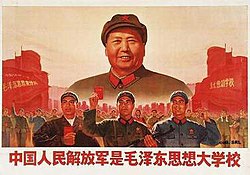
Hysteria and revenge connects to almost every tragedy in history. The Cultural Revolution in China is in my opinion, one of the most devastating events to have occurred, where hundreds of years of history were shattered. Roused by Chairman Mao Zedong, hundreds of people disillusioned with the battering and economical state of China were incited to attack the bourgeois and destroy any relics, bringing their country into the new world. When faced with a hero to lead them to safety and victory, the people followed and began attacking each other. Vengeance set in; due to the fact that only a witness was needed to charge them. Jealous neighbors would report “unfaithful” neighbors and then destroy their homes. Thousands of people led fearful existences—especially landlords—or were thrown into jail as family members turned on each other. Those who did report others were extolled as heroes of the revolution, so it only encouraged this fanaticism. It was not until much later that people began to reflect on this dark chapter and realize the horrors of their actions, caused by a mixture of disenchantment of society and the poor economic state. This event is surely a travesty, but it is not the only one in history.